
Welcome to the Harvard Center for Risk Analysis
The Harvard Center for Risk Analysis (HCRA) is a multidisciplinary group of faculty, research staff, students, and visiting scholars who work together to improve decisions about environmental health and other risks. We conduct state-of-the-art research, educate the next generation of leaders in risk analysis and related disciplines, and encourage public discourse about risk topics. To learn more about HCRA, please contact any member of our faculty or research staff below or click here to join our email list.
Risk Analysis Special Issue on “Risk Assessment, Economic Evaluation, and Decisions”
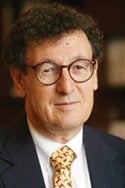 Integrating risk assessment, economic evaluation, and uncertainty to inform policy decisions is a core challenge for risk analysts. Professor John S. Evans, one of HCRA’s founders, has devoted his career to exploring these concerns. A recent special issue of Risk Analysis, “Risk Assessment, Economic Evaluation, and Decisions,” honors Dr. Evans. It builds on his important and innovative work and further explores the links between risk assessment and economics. The starting point was a September 2019 workshop organized by HCRA Director James K. Hammitt and Senior Research Scientist Lisa A. Robinson, with support from the Society for Risk Analysis Economics and Benefits Analysis Specialty Group and several other individuals and organizations (listed here). The special issue, guest edited by Lisa A. Robinson, features a profile of Dr. Evans and nine articles. Links to the articles published in the special issue as well as others presented at the workshop are provided here.
A paper from the issue, “Mortality Benefits and Control Costs of Improving Air Quality in Mexico City – the Case of Heavy Duty Diesel Vehicles,” co-authored by Dr. Evans, Leonora Rojas-Bracho, Dr. Hammitt, and Douglas Dockery, received the Society for Risk Analysis 2021 Best Paper Award.
Benefit-Cost Analysis, Valuing Statistical Lives, and COVID-19
The COVID-19 crisis has focused unprecedented attention on the use of benefit-cost analysis and  approaches for valuing mortality risk reductions, commonly referred to as the value per statistical life (VSL). The pace at which new studies are being completed is extraordinary as is the significant attention they are receiving in the media. These studies emphasize the difficult trade-off between saving lives and economic damages as well as the importance of systematically investigating policy impacts. At the same
  time, this attention has highlighted the need to more clearly communicate the implications of uncertainties in the VSL estimates. HCRA Director James K. Hammitt and Senior Research Scientist Lisa A. Robinson have each written extensively on estimating the VSL applicable to different contexts. Their recent work on COVID-19 includes papers that explore the conceptual framework and empirical evidence and the impact of alternative approaches for adjusting for age.
Directors
James K. Hammitt, Professor of Economics and Decision Sciences
Joel Schwartz, Professor of Environmental Epidemiology
Core Faculty and Affiliates
John Evans, Adjunct Professor of Environmental Health
Elsie Sunderland, Gordon McKay Professor of Environmental Chemistry
Lisa A. Robinson, Senior Research Scientist
Katherine von Stackelberg, Research Scientist
Jonathan B. Wiener, Duke University
Visiting Scholars
Eva Tène, Toulouse School of Economics (2020)
Rebecca McDonald, University of Birmingham (2019)
Danae Arroyos-Calvera, University of Birmingham (2019)
Nathalie de Marcellis-Warin, Polytechnique Montreal (2015-2016)
Daniel Herrera, Toulouse School of Economics (2014)
Emmanuelle Lavaine, Toulouse School of Economics (2014)
Damian Tago, Toulouse School of Economics (2014)
Tuba Tuncel, Toulouse School of Economics (2014)